
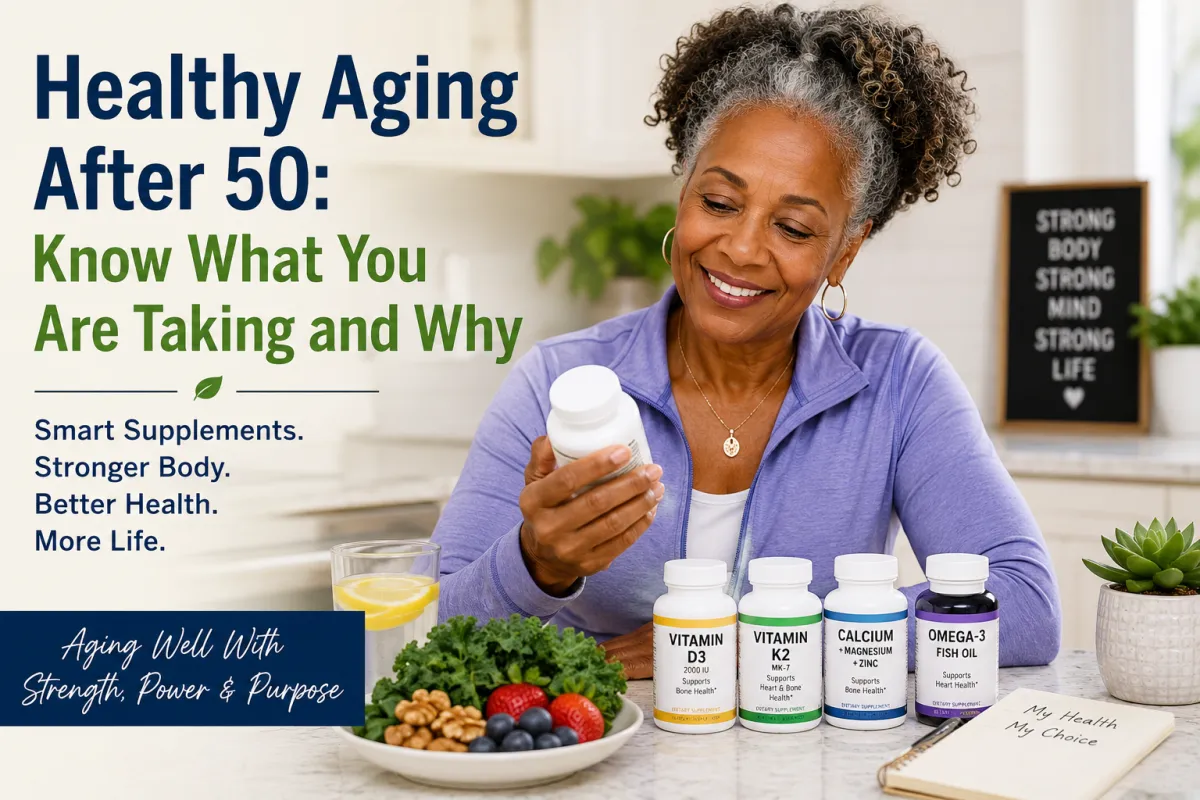
Aging Well After 50: Know What You Are Taking and Why
As we age, many of us begin paying closer attention to our health. We want stronger bones, healthier hearts, better energy, improved mobility, and the ability to continue living independently and purposefully for years to come. In that journey, supplements often become part of the conversation.
Walk into any pharmacy or health store and you will find shelves lined with vitamins, minerals, powders, herbs, and wellness products all promising better health. But here is the question we must ask ourselves after age 50:
Do we truly understand what we are taking — and why?
At Fit Just4U, we believe healthy aging begins with knowledge, wisdom, and intentional choices. Supplements can absolutely support wellness when used appropriately, but they should never replace balanced nutrition, regular movement, hydration, quality sleep, medical guidance, and a healthy lifestyle.
Why Supplement Awareness Matters After Age 50
As we age, our bodies naturally change. Nutrient absorption slows down, metabolism changes, hormones shift, and many adults begin taking medications for chronic conditions such as hypertension, diabetes, arthritis, or heart disease. These changes can affect how supplements work in the body and how they interact with medications.
What works well for one person may not work well for another.
Before adding any supplement to your routine, ask yourself:
Why am I taking this?
Do I really need it?
Has my healthcare provider reviewed it?
Could it interact with my medications?
Is this supporting my health goals or simply advertising hype?
These are important questions because more is not always better.
The Vitamin D Conversation Everyone Should Be Having
One of the most common supplements adults over 50 take is Vitamin D. And yes — Vitamin D is essential. It plays a major role in bone health, muscle strength, immune support, and overall wellness.
But here is what many people do not realize:
Vitamin D3 works best when paired with Vitamin K2.
Vitamin D3 helps your body absorb calcium. However, Vitamin K2 acts like a traffic director, helping guide calcium into your bones where it belongs instead of allowing it to build up in arteries and soft tissues.
Think of it this way:
Vitamin D3 opens the door for calcium.
Vitamin K2 helps direct where the calcium goes.
Without enough K2, calcium may not always end up in the right places.
Why Adults Over 50 — Especially Black Women — Should Pay Attention
Research continues to show that many adults, particularly African Americans, are at greater risk for Vitamin D deficiency. Several factors contribute to this:
1. Melanin and Sunlight
Melanin protects the skin from UV damage, but it also reduces the skin’s ability to produce Vitamin D from sunlight.
2. Weight and Body Fat
Excess body fat can trap Vitamin D, reducing how much becomes available in the bloodstream.
3. Aging and Menopause
After menopause, declining estrogen levels increase the risk of bone loss and cardiovascular disease, making proper nutrient support even more important.
This is one reason healthy aging requires a holistic approach that includes nutrition, movement, medical guidance, stress management, and education.
What the Research Is Showing About D3 + K2
Emerging research suggests that the combination of Vitamin D3 and Vitamin K2 may support:
Bone density and bone strength
Cardiovascular health
Calcium regulation
Blood sugar balance
Healthy aging and independence
While supplements are not miracle cures, science continues to show that proper nutrient balance matters.
How to Shop Smarter for Supplements
Not all supplements are created equal. If you choose to take Vitamin D and K2, here are a few things to look for:
Choose Vitamin D3 Instead of D2
Vitamin D3 is generally considered more effective at raising Vitamin D levels.
Look for K2 as MK-7
MK-7 is a longer-lasting and more bioavailable form of Vitamin K2.
Pay Attention to Dosages
Quality and proper dosing matter more than flashy marketing.
Choose Reputable Brands
Look for products that undergo third-party testing and quality control.
Always Discuss Supplements With Your Healthcare Provider
This is especially important if you take blood thinners or medications for chronic disease.
Supplements Should Support the Plan — Not Become the Plan
One of the biggest mistakes many adults make is depending on supplements while neglecting the basics of health.
No supplement can replace:
Strength training
Regular movement
Proper hydration
Balanced nutrition
Sleep
Stress management
Spiritual wellness
Consistency
At Fit Just4U, we encourage adults over 50 to focus on building healthy lifestyles that support strength, mobility, confidence, and independence for years to come.
Final Thoughts
Aging well is not about chasing every trend on social media or buying every supplement advertised online. It is about becoming informed, intentional, and proactive about your health.
Your body has carried you through decades of life, family, work, caregiving, and responsibility. It deserves care, wisdom, and respect.
So before adding another bottle to your cabinet, pause and ask:
Do I know what I am taking — and why?
Because when it comes to healthy aging, knowledge truly is power.
About the Author
Jo Ann Goodie-Charles, RN, CPT is the founder of Fit Just4U Personal Training & Wellness Center in Houston, Texas. With more than 40 years of nursing experience and over 30 years in fitness, she is passionate about helping adults over 50 age with strength, purpose, dignity, and power.